
SIM & eSIM management
Lifecycle, provisioning and IMEI lock, with SGP.32 eUICC registration and eIM campaigns.
Independent IoT connectivity
One accountable party for the connectivity, the devices and the cost of your estate — on a platform we build and run, over tier-one partner networks.
Getting started
A country list and a monthly volume. You get coverage, roaming constraints and a real ratecard.
Talk to an ExpertPhysical SIMs or eSIM profiles in your own hardware, with portal and API access. No commitment.
Request test SIMsMove across knowing what each session costs, and reconcile the invoice against the sessions behind it.
See how billing worksThe IoT Operator model
Most estates run through four suppliers — a SIM vendor, a device platform, a data pipeline and a spreadsheet reconciling them. Nobody owns the join.
An IoT Operator takes the whole thing — connectivity, hardware, data and cost — and answers for it.
The SIM estate: lifecycle, reach and what it costs.
The hardware: whether it is alive, what it reports, and what you can make it do from here.
The operation the devices exist to serve — where connectivity and hardware answer the same question.
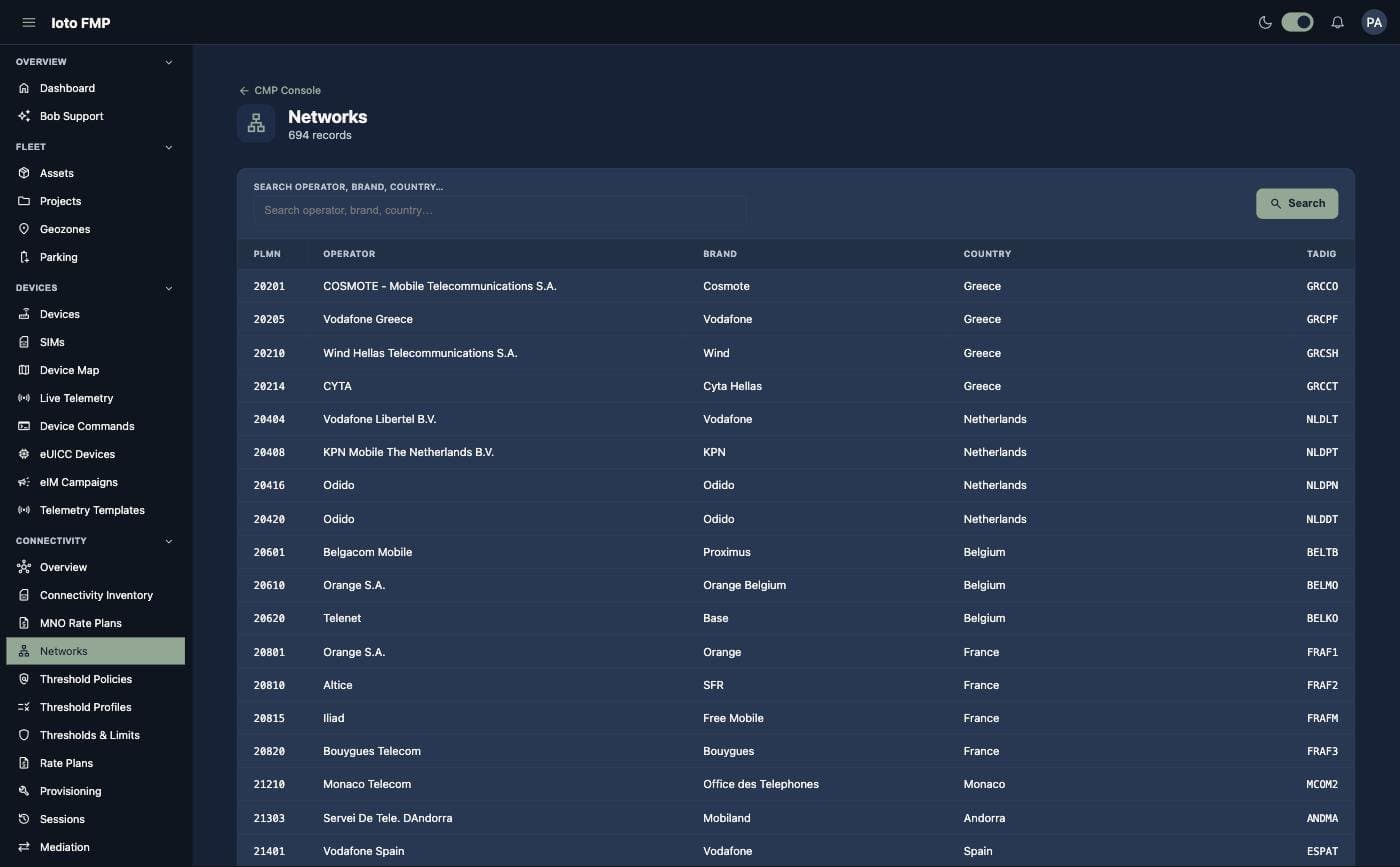
Operator, brand, country, PLMN and TADIG across the reachable footprint.
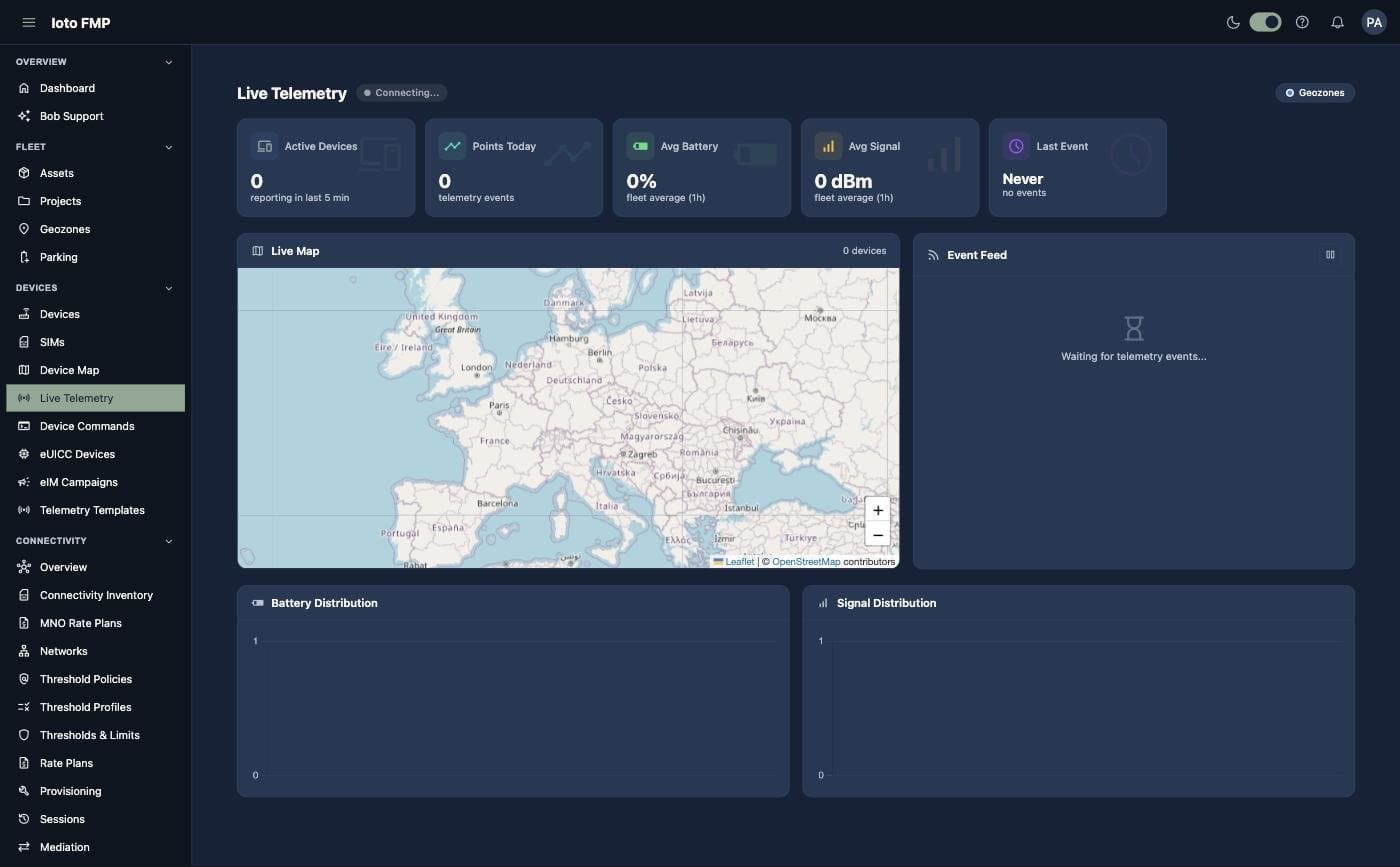
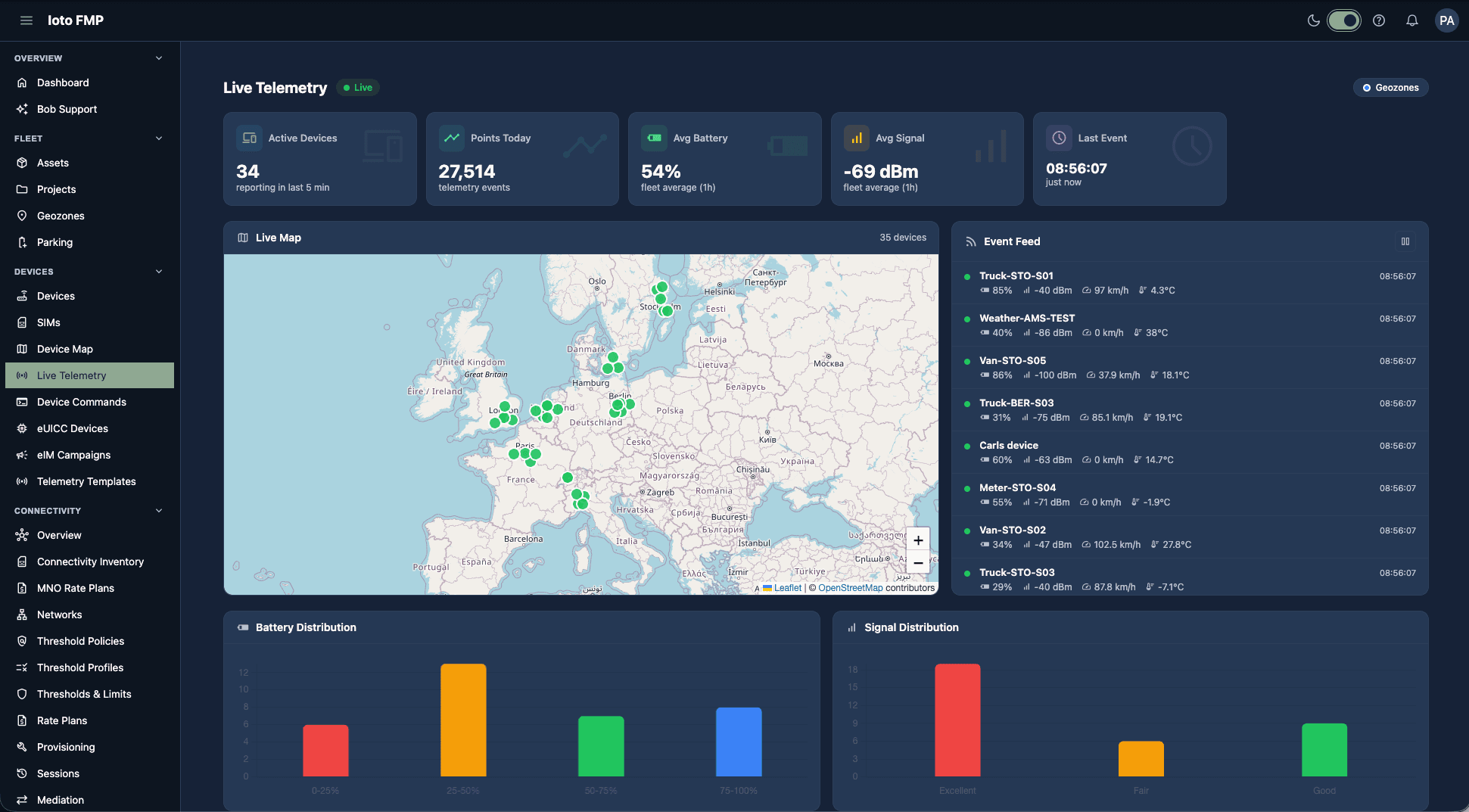
Battery, signal and position, streaming in real time.
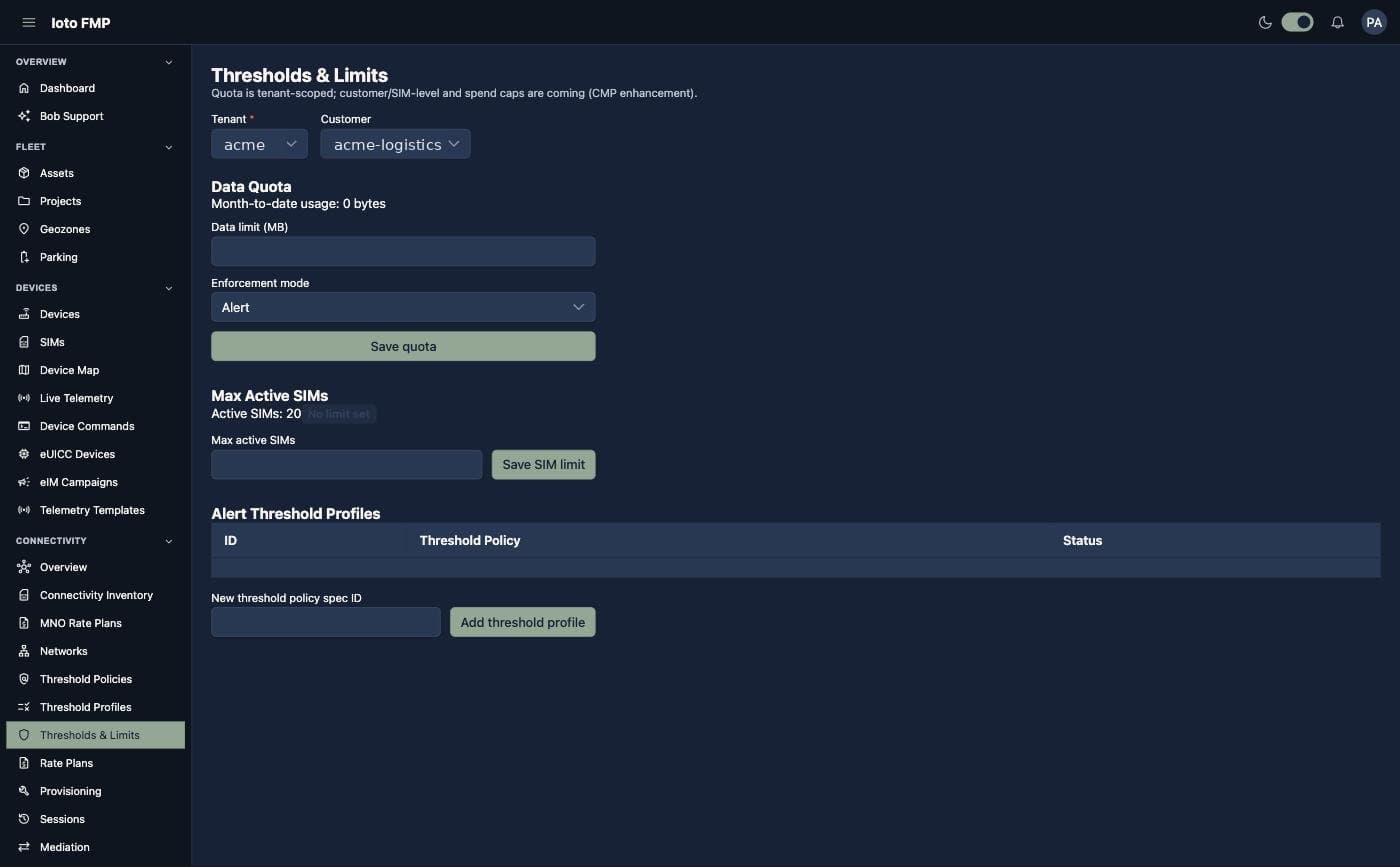
Data quotas, a hard ceiling on active SIMs, and alert profiles — per tenant and per customer.
To be precise about the word. We operate your IoT, not a mobile network. We buy coverage from operators who own the towers, and own everything that decides what your estate does and what it costs.
The shape holds. Ratecard and threshold policy with it.
It works with one thing changed. We say which.
Sometimes the economics are not there. Better said now.
Every figure carries its source, and the questions run in parallel. The speed comes from removing the wait — never a check.
The platform
Most providers assemble connectivity management, mediation and billing from three vendors and hope the seams do not show. We run them as one.
Lifecycle, provisioning and IMEI lock, with SGP.32 eUICC registration and eIM campaigns.
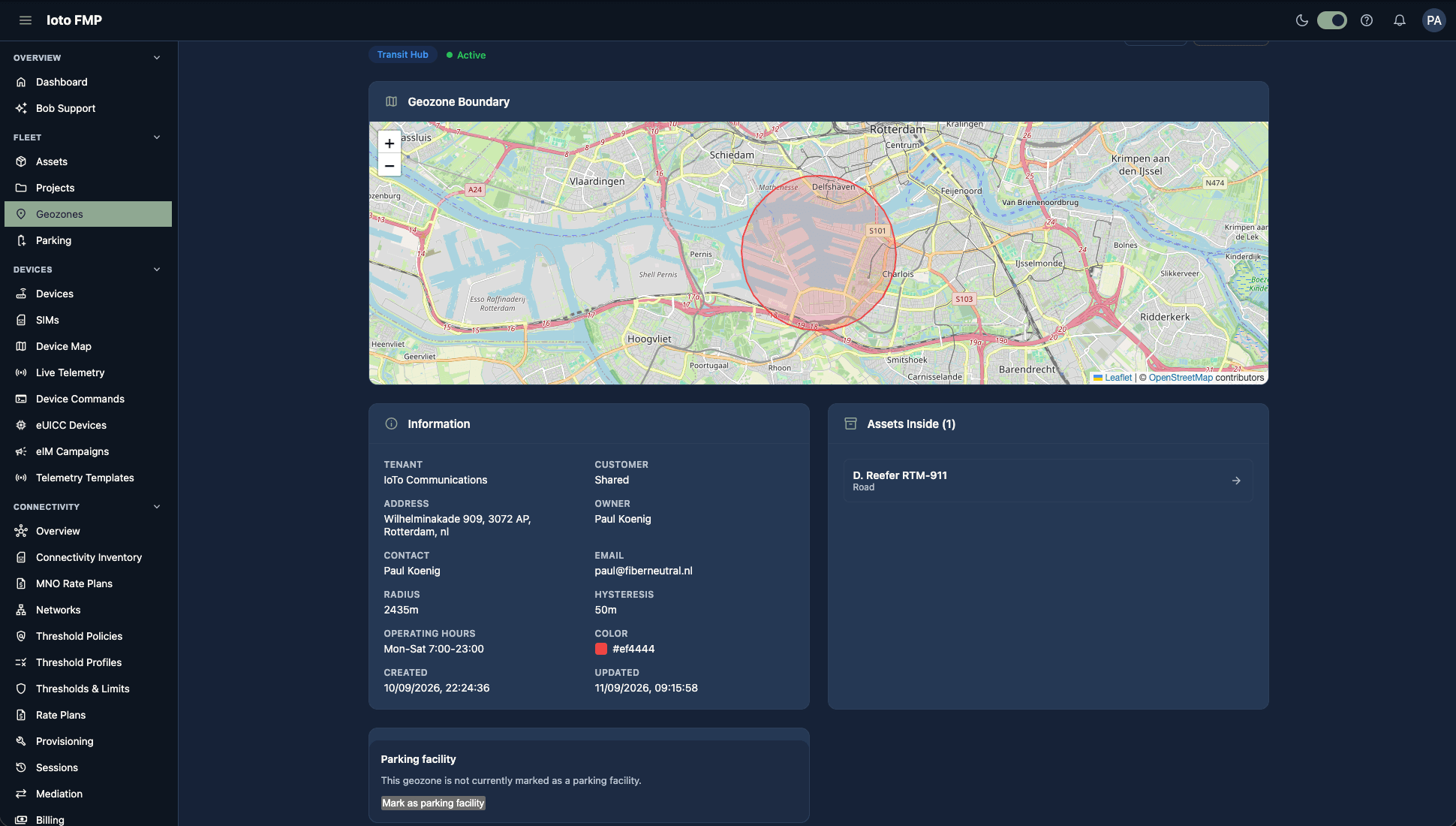
Devices, assets and projects on one map, with telemetry, remote commands and geozones.
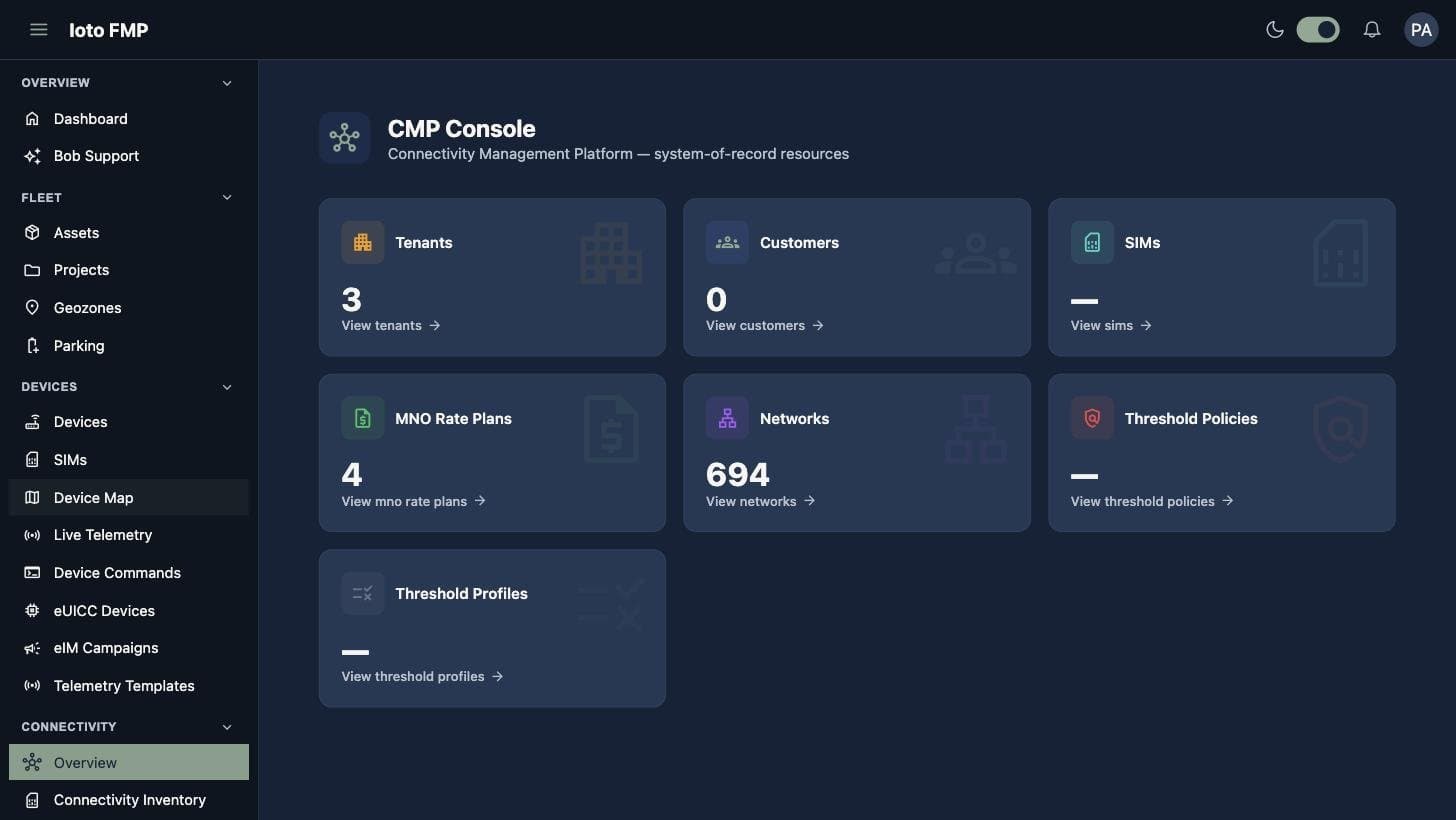
Networks and rate plans as system-of-record objects, with thresholds and hard limits.
Real-time CDR processing feeding cost by network, customer and period. Exports in full.
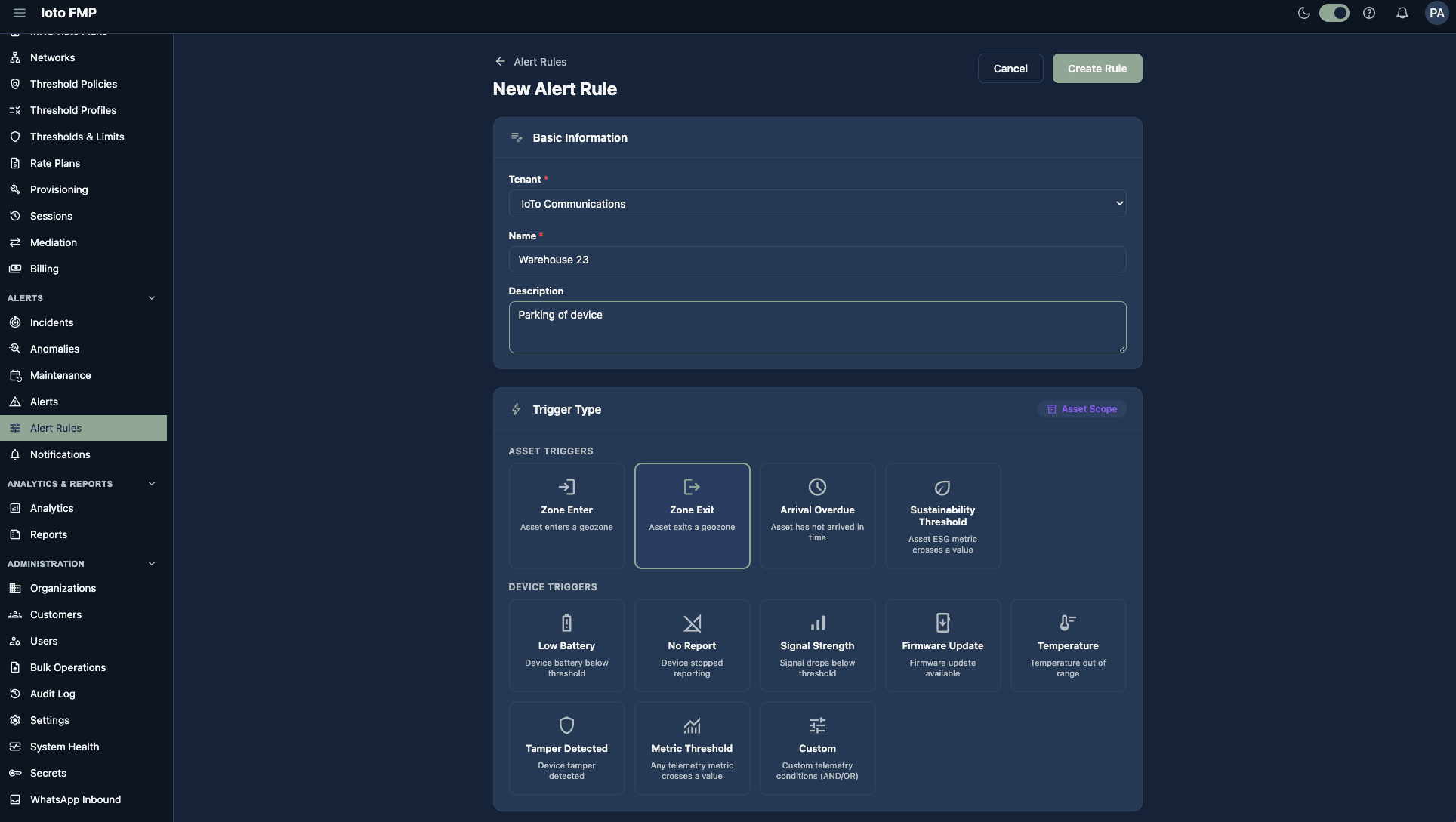
Incidents, anomalies, alert rules and notifications. The fleet tells you.
Consumption trends, IMSI statistics and per-network breakdown. Plus scheduled reports.
Under the hood
Engineered for the volumes each of them generates — in the same system of record.
Devices publish to a broker. The platform subscribes, streams and stores.
Telemetry, CDRs and events on a streaming backbone. Nothing lost between network and invoice.
CDRs enriched, deduplicated and rated as a separate service.
Session history, telemetry and billing rollups in a store built for the query.
Enforced in the database, not by a filter someone can forget.
The difference
Your fleet produces two separate worlds of data. Connectivity knows what each SIM cost, on which network, under which plan. The device knows where the asset is, how warm it is, what battery is left. Most platforms give you one. We join both in one system of record.
System of record
Tenants, customers, SIMs, networks, rate plans and thresholds as objects in one system — not rows in four spreadsheets.
| Country | Networks | Technologies | Permanent roaming | Notes |
|---|---|---|---|---|
| Germany | 3 | 4G · 5G · LTE-M · NB-IoT | Permitted | — |
| Denmark | 3 | 4G · LTE-M · NB-IoT | Permitted | — |
| Türkiye | 2 | 4G · NB-IoT | 90–120 days | BTK data localisation; enforced |
| Spain | 3 | 4G · 5G · LTE-M | Permitted | — |
| Brazil | 2 | 4G · LTE-M | Capped | Local breakout available |
| China | 2 | 4G · NB-IoT | Local only | Requires local profile |
Illustrative rows for this concept — the live page renders from the coverage database and is searchable by country and technology.
Industries
Network changes several times a day, across jurisdictions with different rules.
Installed once, running a decade on LTE-M or NB-IoT. High count, low data, real roaming exposure.
Uptime is contractual and the auditors want to see how the invoice was produced.
Permitted, capped or prohibited — and what to do about each.
August 2026What the line items mean, and how to reconcile them.
August 2026Choosing a radio for devices you will not touch again.
July 2026Enterprise plans
Not tiers off a price list. Every plan is assembled from the same mechanics and sized to your deployment.
For teams validating a design or a supplier.
For a deployed fleet across borders that needs predictable, explainable cost.
For those carrying connectivity into their own customer contracts.
How every plan is built
One allowance across the fleet. No buying headroom per SIM.
Zones with a stated rate. Roaming priced in, not added afterwards.
Commit and get a bundle. Overshoot and get credited, not penalised.
Invoice categories match the portal. Every charge traces to its sessions.
The questions we would ask on a first call. Answer what you know.
Quietly, and without wasting each other’s time.